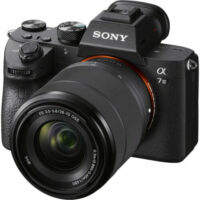
The Sony A7 III was a “game-changer” when it launched in 2018, and remarkably, as we navigate 2025, it remains one of the most discussed cameras on the market. But with newer technology like the A7 IV and the rumored A7 V on the horizon, the question remains: Is this 7-year-old workhorse still worth your money?
The short answer is: Yes, but it depends entirely on whether you are a photographer or a videographer.
The “Stills” Argument: Why It’s Still a Steal
For pure photography, the A7 III hasn’t aged nearly as much as the calendar suggests.
- The 24MP Sensor: Unless you are printing billboards, 24.2MP is still the “goldilocks” resolution. It offers a perfect balance of detail, low-light performance, and manageable file sizes.
- Autofocus Excellence: While it lacks the “AI-based” subject tracking of the newest models, the 693-point AF system with Eye-AF is still faster and more reliable than many brand-new mid-range cameras from other brands.
- Battery Life: It uses the same NP-FZ100 battery found in modern Sony cameras, which remains one of the best in the mirrorless world, often outlasting the A7 IV in real-world stills usage.
- Price Point: In 2025, you can find the A7 III at incredible prices—often under $1,200 new or as low as $800–$900 used. This leaves you more budget to spend on high-quality E-mount glass, which matters more for image quality than the body does.
The “Video” Reality Check: Where It Shows Its Age
If your primary goal is video content or “hybrid” shooting, the A7 III starts to feel like a relic.
- 8-Bit Color: Unlike the A7 IV or the A7C II, the A7 III only records in 8-bit. This makes heavy color grading (S-Log3) much more difficult, leading to “banding” in skies and skin tones.
- No 4K 60p: You are limited to 4K 30p. If you want high-quality slow motion, you have to drop down to 1080p.
- Old Menu System: It uses Sony’s older, “confusing” menu layout. It lacks the intuitive touch-based interface and color-coded tabs of the newer generations.
- The Screen: It has a tilting screen rather than a fully articulating “flip” screen, making it harder for solo vloggers to frame themselves.